
About Oghara
HISTORY & ORIGIN: Introduction
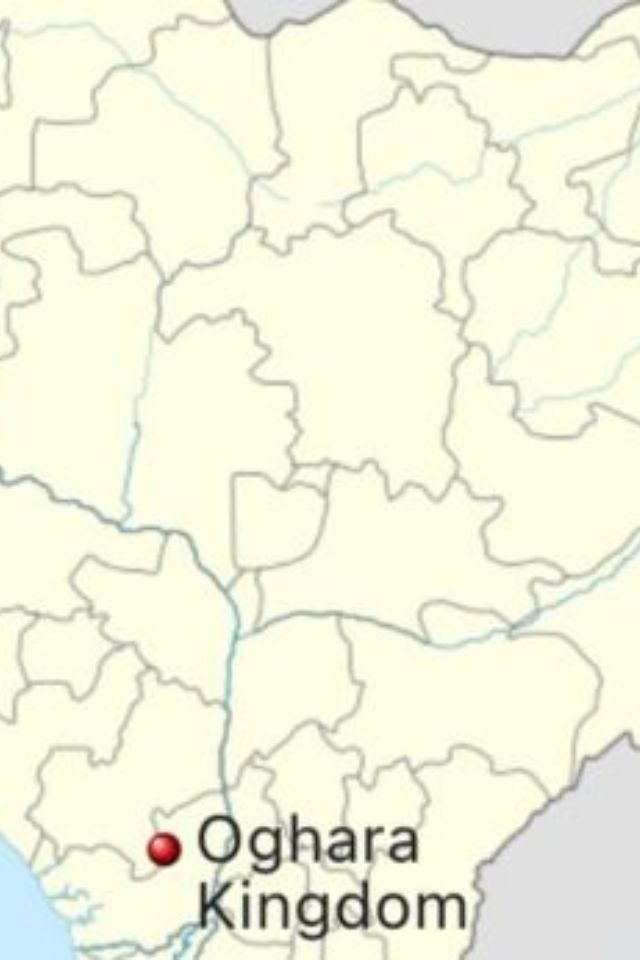
Oghara Kingdom is one of the largest Kingdoms in Urhobo nation of Delta Central Senatorial district. It is one of the three Kingdoms that constitute Ethiope West Local Government Area of Delta State and one of the six Kingdoms that constitue the Ethiope Federal Constituency. It lies between longitude 6.7 degrees east and 5.15 degrees west, while on latitude 6.15 degrees south and 5.30 degrees north of the equator. It is precisely located on the Midwestern part of Nigeria. The Kingdom is the gateway to Urhobo land and the Niger Delta. It is a peninsula bounded in the North by the Osiomo River (Ologbo) in Edo land, in the West by Koko in Itsekiri land, in the East by the Jamison River in Mosogar land and in the South by the River Ethiope from where the Local Government Area derives its name. it has a land mass of approximately 175 square kilometers. The Kingdom is geographically in the rain forest belt so, most of the land is made up of thick forest while some other parts are flat and swampy, part of which is home to the mangrove swamp forest which is a common feature in the Niger Delta region of Nigeria The Ethiope River serves as a water way to and from Sapele town and other riverine communities within and outside Delta State. The federal express road from Lagos to Warri, run through the Kingdom. At the later part of the 19* century, a large proportion of the land has been deforested and replaced with rubber and palm trees which are more of economic valure to the people.
POPULATION
The geographical location advantages of Oghara kingdom contribute a great deal to its rapid population growth. In 1931, its population was 8,000, in 1952 it stood at 17,353 and 1963 population figure puts it at 27,000. The population figure was about 700,000 by the 2006 (unofficial) Census. It is now estimated to be about 900,000. The later industries, companies and institutions sited in Oghara between the 19* and the 21* centuries attracted a large labour force from all over the country this no doubt account for the great leap in its population figure.

ECONOMY
The people are predominantly farmers, hunters and subsistence fishermen. They are big time timber merchants and are also into palm oil production. The Kingdom is host to a good number of tertiary institutions such as the Delta State University Teaching Hospital located in Edjemuonyavwe, the Delta State Polytechnics in Otefe, the Electoral Institute (INEC) in Edjemuonyavwe, the western Delta University in Ogharefe and a campus of the National Teacher’s Institute, Kaduna in Oghareki where teachers are trained both for the Teacher’s grade two Certificate (TC | |) and the Nigeria Certificate of Education (NCE). There is also the Pan-Ocean Oil Corporation in Ovade, the Nigeria Gas Company, Ovade and about fifteen oil tanks farms which distribute petroleum products to many parts of Nigeria. There is J.K. Rubber Industries Ltd, gharefe, Pamol Rubber Company Ltd, Ejemuonyave and pamol Oil Palm Company Ltd, Ajagbodudu. It has a mini stadium that has played host to many national and international football competitions. It also hosts the Nigerian Naval Logistics headquarters and a Mobile Police base.

RELIGION
Oghara people are very religious, majority of them were adherents of the African Cultural Traditional Religion. They worship Oloku the god of the river, Ejenu the god of the sky, Anote, Uke, etc. however, the influence of Christianity has entered deep into the Kingdom and about eighty percent (80%) of population now belong to the Christian faith.

THE POLITICAL SYSTEM
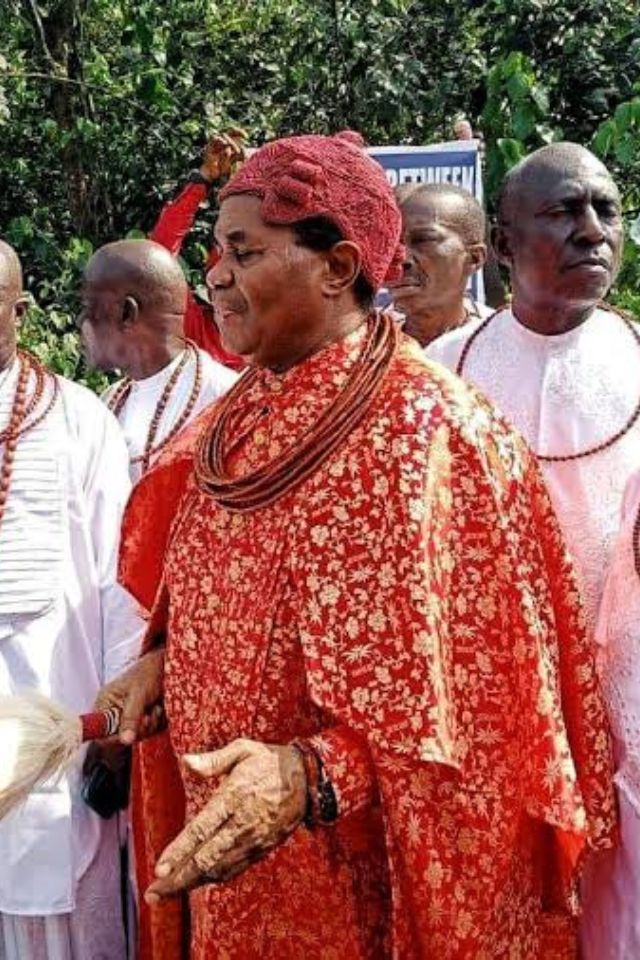
Oghara Kingdom operates a kind of parliamentary system of government with the King (Ovie) as head of state while the oldest man (Okaorho) is head of parliament. The Kingdom as earlieron mentioned consists of two territorial units or twin system of governments that has corresponding political structures of equal relevance in Oghareki and Ogharefe which runs side by side without friction and or conflict. (Keer R.B. 1927). The plutocracy and gerontocracy. The plutocracy aspect is revealed in the composition of the Council of Chiefs and Elders which is largely made up of Ekakuros (Chiefs) whose pedigree were exemplary in character, illustrious and resourceful all of whom are selected from the communities (Unokas). The Council of Chiefs and Elders meet regularly on specific market days at their meeting place called Oguedion which literal interpretation is “house of the ancestors”. The Speaker (Unugbrogodo) preside in the council of Chiefs (guedion) and has power to make policies and take decisions, settle disputes on civil matters. The Ovie (King) however is the final arbiter in any case. The highest office among the Chiefs (Ekakuros) is that of the Speaker (Unugbrogodo) with the people’s Speaker (Unuevworo) as next in command followed by the oldest Chief in rank not in age (Enowha). The position of Unugbrogodo is for life unless impeached by the Chiefs in council. There is also another junior council called Inotus made up of young men who are the traditional military men charged with the responsibility to defend the territorial integrity of the community. The women also have a corresponding council for airing out their views which is called Ewheya. During Ore and lyeri festivals or in any other crucial gathering with religious undertone, it is the oldest man (Okaorho) of each sub-Kingdom who presides and probably communicates with the ancestors. This aspect of Oghara kingdom buttresses the gerontocracy nature of the Council is not superseded by any other political unit except the Ovie (King) who functions in collaboration with the Council of Chiefs and Elders. The Ovie (King) is the overall ruler of the entire kingdom but has no traditional place in the Council of Chiefs and Elders (Oguedion) and does not attend. He only attends when invited for specific racitional rites or when he has something to present to the council (Oguedion) which he desire to present in the open house. The Ovieship (Kingship) institution connects the two sub-kingdoms. All other things are done independent of each other except of course some others that has to do with the interest of the entire kingdom. The institution rotates between the two sub-kingdoms of Oghareki and gharefe.
EXPLORING THE LEGACY OF OGHARA
Discover the rich history, royal heritage, cultural traditions, and enduring values that have shaped Oghara Kingdom across generations.
EARLY FOUNDERS
The history of the migration of ghara people like other Urhobo Kingdoms is characterized by several factors which range from inter communal wars, adventure, restiveness, family feud, to the desire to expand on over exploited and over populated existing territory. However, the reasons for these movements can be summarized as the desire for the pursuit of one’s interest, of well-being and happiness nurtured by the dreams of wealth, freedom and the desire to live in an egalitarian society. Oral history has it that ghara people left Agbarha-Otor before I 200AD. And settled between the Jamison and the Osiomo Rivers (Ologbo). The Miller intelligence report of 1929 stated that the names of these forest groups of founder’s first were not known as they left no names or children. However; oral history says that the leader of the group was Oghara hence the settlement was named Oghara which is also the name of the parent village where they came from in Agbarha-Otor. This first group almost went into extinction due to constant raid by more powerful tribes. The remnants who survived these attacks went deep into the hinterland away from the river thus were able to survive from one generation to another until the arrival of the second wave of Urhobo people from the same Agbarha-Otor. The first founders of Oghara settled first in present day ghareki and well known during the Ogiso dynasty in Igodomigodo country (Benin Kingdom). Oba Olua who reign in the Benin Kingdom between 1473 and 148l set his son Iginuwa adrift at Oghareki at about 1478 A.D. As at then, Oghara people were well established in their present location near the River Ethiope. The people could not be made to follow the boat in which Iginuwa drifted into the creek to Ode-Itsekiri (Big Warri) since they like the Binis were land based people. (Egharevwa 2004 p 202l). The second wave of Urhobo people recorded in oral history were Ogbraa Ekakabo, Agoo and Emeta from Agbarha-Otor, Eghoro and Ediagbon from Eku and Kokori in Agbon Kingdom respectively. According to the peoples oral narration, Eghoro, Emeta and his son Akojeve came to present day ghareki where they met Ogbraa Agoo vand Ekakabo their uncles who have arrived earlier and were well settled. Overtime, other parties were invited to join them. Remnants of the first group who were driven into the hinterland due to slave raids who have been there for generations somehow came back to the river side to join them and organized themselves to ward off the slave raiders. After some years in Oghareki, Emeta and Eghoro moved secretly to Edjeba (gharefe) due to quarrels may be between them and their uncles or between their followers. A search party was organized for Emeta and Eghoro and when eventually found; they were asked “Etine wa djeba” meaning “is this the end of your fight”. Hence the native name for gharefe is Edjeba. To this question, they answered in the affirmative and added that there were too many (ero) gossips. They made peace with their brethren and were persuaded to return but they opted to remain in their new found land while maintaining close relations with them at Oghareki. Over time, Eghoro and Emeta who were skilled hunters decided to explore the surrounding land. Eghoro went westward reaching as far as the Osiomo River in Ologbo. Emeta did not go too far before reaching the river where he saw a fisherman from Agbarha-Otor who informed him that there were other Urhobo people in the hinterland. Emeta followed the man’s description and later met Ediagbon and his group at Urhiokiri. Ediagbon is from Kokori in Agbon Kingdom, a neighbouring village located between Agbarha-Otor and Eku. His mother like Eghoro is also from Agbarha-Otor. This group (Ediagbon) later moved to Edjeba (Ogharefe) which was by now regarded as their operational headquarters (Otovwodo). Oghara is made up of two sub Kingdoms of Oghareki and gharefe. Oghareki is acknowledged by all as the senior of the two and it is the traditional headquarters and ancestral home of the Oghara people. Ogharefe however remain the administrative headquarters of the Kingdom. Oghareki is made up of Udurhe and Uduaka communities consisting of Ogomore, Ugbeku, Unuoko, Ajagbodudu, Ophuophu, Arakpa, Ugboghelete, Otegbo, Okuefe, Ajaruwa etc. ogharefe is made up of five Unuokos (communities) of Adagboyeri Edjemuonyave, Ijomi, Otefe, and Ovade consisting of Ugbenu, Ajeketa, Okuku, Okurode, Okuhevie, Unoghovo, Idjedeoyibo (New site) Otumara, Obromudu, Okuephapha, Ugbeve, Oriaja, Urhiokiri, Okwierie, Okuegba, Okurho, Omoja, Ejenesan, Ebiuweri, ljojo, Igbeghabo, Ajamikawa, Edemukpe, Ebrifo, Orobo, Efurokpe etc.
Sub-Clans: Ogharefe & Oghareki
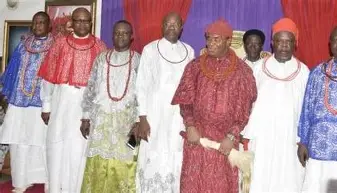
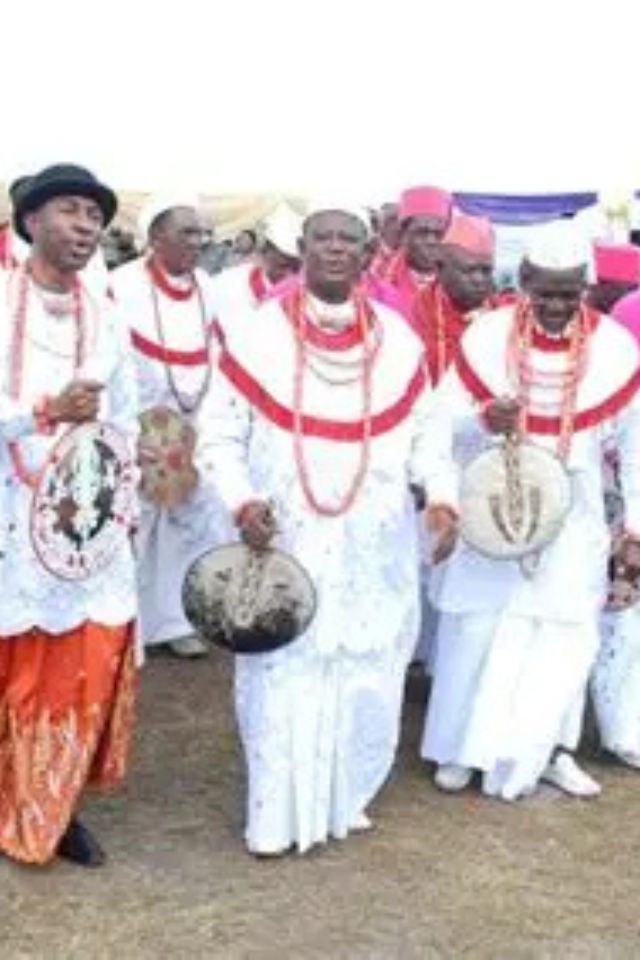
Oghara Kingdom is historically made up of two major sub-clans — Ogharefe and Oghareki — each with its own distinct history, quarters (neighbourhoods), and roles within the kingdom’s cultural and traditional organization.
The Origin of the Sub-Clans
According to oral tradition, the founders of Oghara originally settled under the name Oghareki, expressing their shared identity as a people. With time, internal differences led some members to establish a separate settlement known as Ogharefe, while maintaining ties of brotherhood and shared heritage with Oghareki.
Ogharefe Sub-Clan
The Ogharefe sub-clan consists of five quarters known traditionally as unoka:
Adagboyerin
Edjemounyavwe
Ovade
Ijomi
Otefe
Ogharefe plays an important role in cultural festivals like the Iyerin Festival and holds its own council to manage affairs specific to its people, while contributing to the unity of the kingdom as a whole.
Oghareki Sub-Clan
The Oghareki sub-clan comprises two primary quarters:
Udurhie
Uduaka
Like Ogharefe, it also has its own Oguedion (council of chiefs and elders) that administers cultural practices, conflict resolution, and community rites in accordance with Urhobo tradition.
Roles Within the Kingdom
Both sub-clans rotate the kingship (the title of Ovie) to ensure balanced representation and unity within Oghara. Each sub-clan’s leaders work with the kingdom’s traditional council and participate fully in cultural events, development forums, and disputes that affect the entire community.
his dual sub-clan structure reinforces social cohesion, preserves distinct identities within the kingdom, and ensures that every part of the Oghara community contributes to its ongoing legacy.
FOR MORE INFORMATION
Admin@ogharakingdom.org
Call Us
+1 234 567 890