
The Monarchy
OVIESHIP (KINGSHIP) INSTITUTION
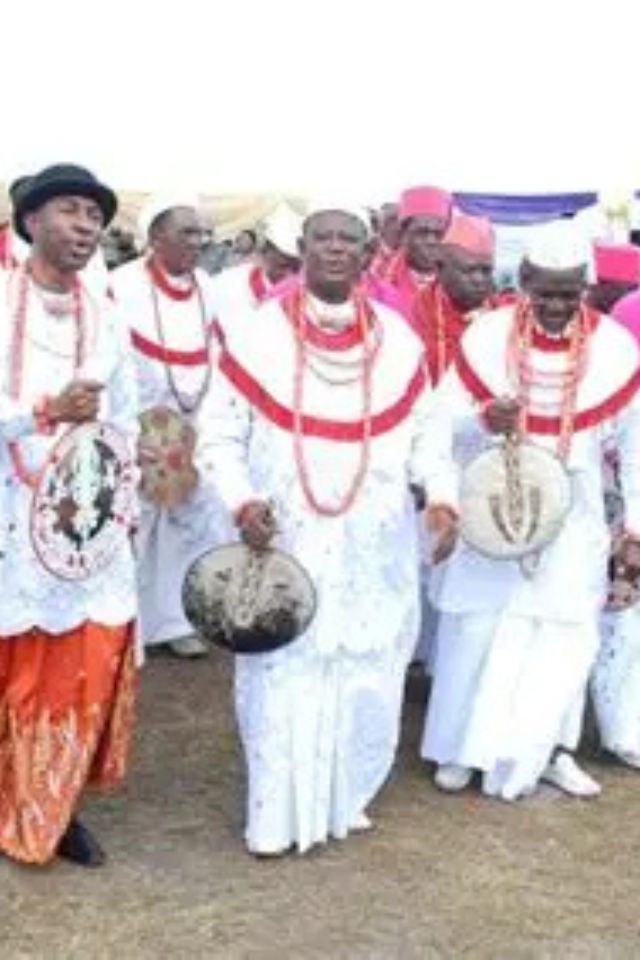
Oghara people replicated the political structure that exists in their parent kingdom of Agbarha-Otor right from when they settled down in their new abode. The people at a point realize the need to have some office holders with powers beyond that exercised by a gerontocratic set up. They wanted someone to handle and guide group meetings, to take and execute decisions”. This led them to developed the Ovieship (Kingship) institution as early as 1260 A.D. but the institution was not very strong until about 1 350 A.D. Oral history indicates that a great man by name Efeki, ruled Oghara as Ovie (King) at about 1350 A.D. and 1380 A.D. His two sons Oreki and Orefe also ruled Oghara as Oreki I and Orefe I from 1380 A.D. to 1413 A.D and 1414 A.D to 1470 A.D respectively. These two kings’ originated the Oreki and Orefe lines of ruling houses in ghara. The two sub-kingdoms of Oghareki and Ogharefe were ruled conterminously from ogharefe the administrative headquarters. Before Orefe I joined his ancestors there was no king in Oghara between 1470 and the early 1950s. This was a period of interregnum in Oghara history. However, according to Osigidi Uku Ogharaname Orefe I| JP, Ovie of Oghara kingdom (1954-1977), a great woman by name Eruramre took over rulership of Oghara during the later part of this period of interregnum. She was a woman. endowed with much who led ghara to victory in several battles to ward off invaders from neighbouring cities especially the Binis. She was from the Ogbojere family of Adagboyeri. This was not strange as there have been powerful women who even ruled in Igodomigodo. After her, Chief Atumah Odobor and Chief Otubu took charge of Oghara affairs with Chief Atumah Odobor as the leader. In the late 1940s and early 50s when the elders of Oghara now found it expedient to revive the Ovie ship institution, (Kinship) consultations were made and Chief Matthew Abutor from the lineage of Queen Erurame was eventually chosen as Ovie (King) in 1954.
The Reigning Monarch
HRM Noble Oyibo Eshemitan, FCA (Uku Oghara Na’me) – Orefe III, Ovie of Oghara Kingdom
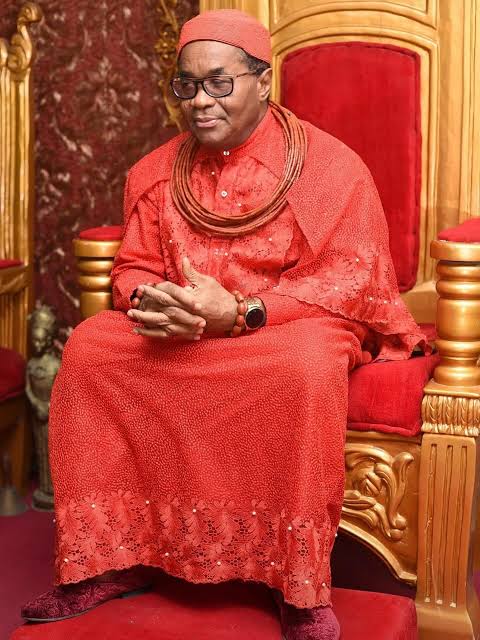
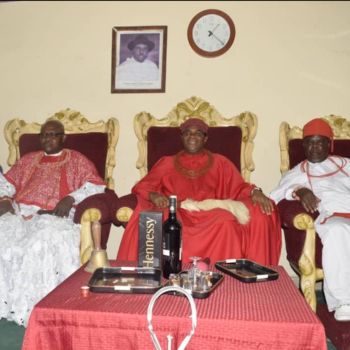
Current & Past Kings of Oghara Kingdom
HRM OREFE II JP, Osigidi Uku Ogharaname, Ovie of Oghara Kingdom 1954-1978
The new Ovie was crowned on the 19* of January 1954 as His Royal Majesty Orefe II JP, Osigidi Uku Ogharaname. Thus, ending a period of interregnum that lasted for about five hundred years, the new monarch Chief Matthew Aguasi Abutor is the son of Chief Abutor lyibor from Adagboyeri in Ogharefe. He was a sergeant major in the colonial police and was serving in Ibadan. Chief J.O. Ometan from oghareki was installed along with him as iyasere (prime Minister). His Royal majesty was at a time, secretary of the Traditional Rulers Council of the then Mid-West Region brought so much development to ghara Kingdom. His Royal Majesty Orefe I JP Osigidi Uku Ogharaname joined his ancestors on the Ist January 1978.
HRM OREKI II JP, Uku Ogharaname Ovie of ghara Kingdom 1978-2011
Oghara tradition demands that a new Ovie (king) be installed a year after the rites of passage of the last one. On Saturday the l" of September 1979 another Ovie (king) was crowned a sOreki II JP. Uku Ogharaname. He is Chief Isaac Boyi Umukoro from Okuefe in Udurhie, Oghareki. He was a former Councilor in Ethiope Local Government Council and a successful business man. Chief George Agunu from ljomi in Ogharefe sub-kingdom was installed with him as iysere and on the death of Chief George Agunu on the 27" of June 1 999; Chief Michael Champion Oboh also from Ijomi was installed to replace him in the year 2000. The reign of Oreki II, Uku gharaname also brought much development to ghara and it was during his reign that an Oghara son Chief James Onamefe Ibori became the Governor of Delta State. His Royal Majesty Oreki II JP, Uku Ogharaname joined his ancestor in 2011
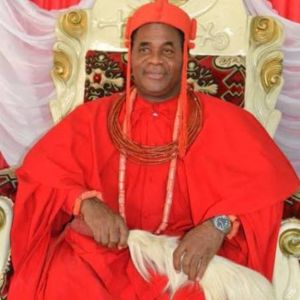
HRM OREFE III, B.S.c. MBA, FCA. Uku Ogharaname, Ovie of Oghara Kingdom 2012- till date
After the traditional rites of passage of Oreki II JP, Uku Ogharaname, another Ovie (King) was crowned on Thursday 9th of August 2012 as orefe III Uku Ogharaname. He is Chief Noble Oyibo Eshemitan from Ovade in Ogharefe. Chief Samson Takpor JP was installed with him as lyasere (Prime Minister). His Royal majesty is the son of Chief Wilfred the son of Eshemitan the son of Enemeri, the son of Esiegbe from Okuhevie in Ovade. He is an Accountant by profession, a fellow of the Institute of Chartered Accountants of Nigeria, (FCA) and a successful business. He was handed the staff of office as Orefe Ill Ovie (King) of Oghara Kingdom by the Governor of Delta State of Nigeria Dr. Emmanuel Ewata Udughan on Wednesday the I 6th of January 2013. There has been an unprecedented growth and development in the kingdom within the last forty years in all areas of human endeavor which the people attributes to the grace of God almighty who has made it possible.
EXPLORING THE LEGACY OF OGHARA
Discover the rich history, royal heritage, cultural traditions, and enduring values that have shaped Oghara Kingdom across generations.
Royal Traditions & Succession

The monarchy of Oghara Kingdom is deeply rooted in Urhobo tradition and governed by customs that have been preserved for generations. The royal institution exists not only as a symbol of authority but as a sacred trust responsible for maintaining peace, justice, cultural identity, and continuity within the kingdom.
Royal Traditions
Royal traditions in Oghara guide leadership conduct, community relations, and cultural ceremonies. These traditions define how the Ovie relates with the people, the council of chiefs, and ancestral institutions.
Key royal traditions include:
Custodianship of Culture: The Ovie serves as the chief custodian of Oghara customs, rituals, and festivals. Major cultural events, ancestral rites, and traditional ceremonies are conducted under royal supervision.
Sacred Regalia and Symbols: The Ovie is identified by royal coral beads, ceremonial attire, and palace insignia that symbolize authority, continuity, and ancestral approval.
Traditional Justice: The palace functions as a center for customary arbitration. Disputes that cannot be resolved at family or quarter levels may be brought before the Ovie and council for settlement based on tradition and fairness.
Unity and Neutrality: The Ovie is expected to remain neutral in internal disputes, acting as a unifying figure across clans, families, and social groups.
Succession to the Throne
Succession in Oghara Kingdom follows a rotational kingship system between the two major sub-clans: Ogharefe and Oghareki. This system ensures balance, fairness, and unity within the kingdom.
The process of succession includes:
Rotation Principle
The throne alternates between eligible ruling houses of Ogharefe and Oghareki. Once a king from one sub-clan completes his reign (which is for life), the next king must come from the other sub-clan.Nomination & Screening
Eligible princes from the ruling house are nominated and screened by designated kingmakers and senior chiefs. Character, lineage, integrity, maturity, and service to the community are key considerations.Traditional Consultations
Spiritual and traditional consultations are conducted in accordance with Urhobo custom to affirm ancestral approval of the chosen candidate.Royal Seclusion & Rites
The selected candidate undergoes a period of seclusion during which he is instructed on palace traditions, taboos, royal conduct, and the responsibilities of kingship.Coronation Ceremony
The coronation is a grand public ceremony attended by chiefs, elders, community members, and invited dignitaries. The new Ovie is formally presented to the people and installed as the paramount ruler of Oghara Kingdom.
This succession process preserves stability, legitimacy, and respect for ancestral laws.
Palace Officials & Structure
The administration of Oghara Kingdom operates through a structured palace system, combining royal authority with collective leadership. The Ovie is supported by a hierarchy of palace officials, chiefs, and elders who ensure effective governance and cultural continuity.
The Ovie (King)
The administration of Oghara Kingdom operates through a structured palace system, combining royal authority with collective leadership. The Ovie is supported by a hierarchy of palace officials, chiefs, and elders who ensure effective governance and cultural continuity.
The Oguedion (Council of Chiefs & Elders)
The Oguedion is the highest advisory body to the Ovie. It comprises senior chiefs and respected elders drawn from both Ogharefe and Oghareki.
Functions include:
Advising the Ovie on governance and tradition
Interpreting customary laws
Mediating disputes
Supervising succession and coronation processes
Iyasere (Traditional Prime Minister)
The Iyasere is the second-in-command to the Ovie and traditionally comes from the opposite sub-clan of the reigning king.
Responsibilities include:
Coordinating palace administration
Acting as intermediary between the Ovie and chiefs
Presiding over meetings in the absence of the Ovie
Unugbrogodo (Clan Heads)
The Oguedion is the highest advisory body to the Ovie. It comprises senior chiefs and respected elders drawn from both Ogharefe and Oghareki.
Functions include:
Advising the Ovie on governance and tradition
Interpreting customary laws
Mediating disputes
Supervising succession and coronation processes
Quarter Chiefs & Palace Title Holders
Below the clan heads are:
Quarter Chiefs – manage specific quarters or communities
Palace Title Holders – officers responsible for rituals, ceremonies, security, and communication
These officials ensure that palace decisions are effectively implemented at community level.
Traditional Balance & Unity
The palace structure is deliberately inclusive, with representation from both sub-clans at all levels. This balance strengthens unity, prevents marginalization, and ensures that leadership reflects the collective will of Oghara Kingdom.